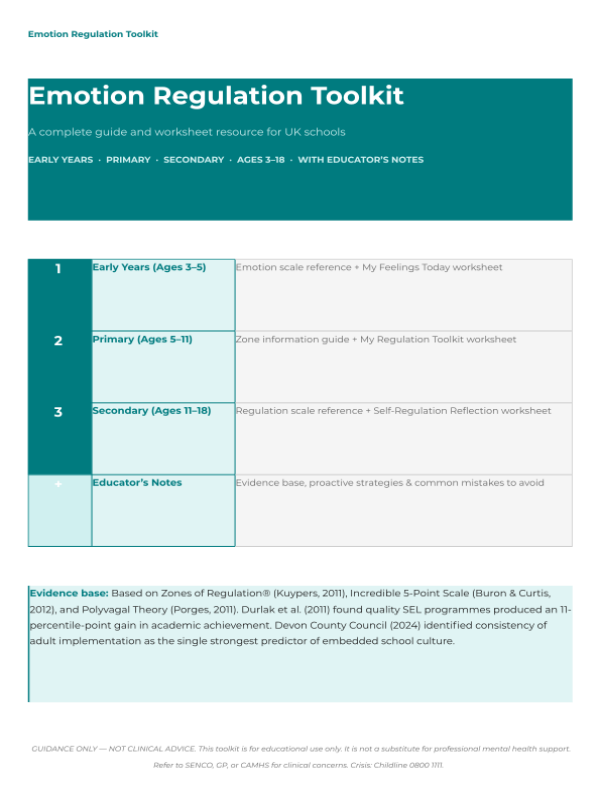
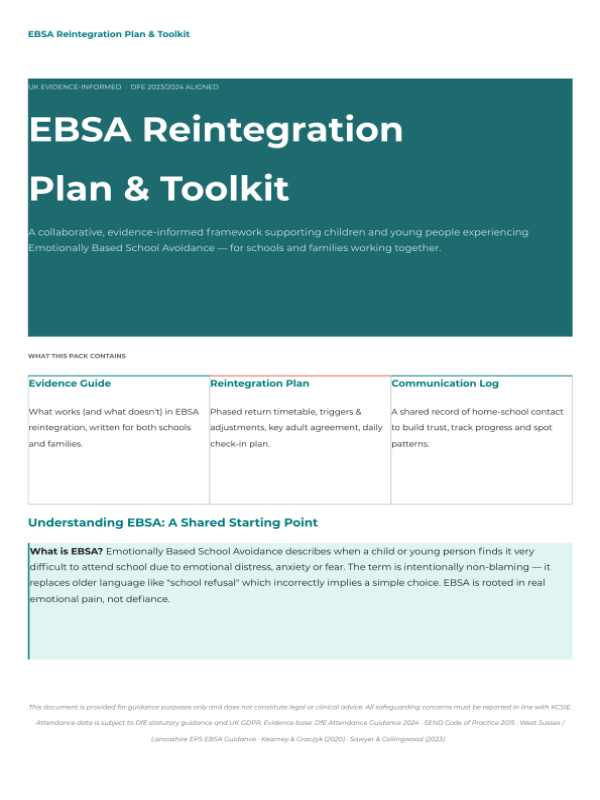
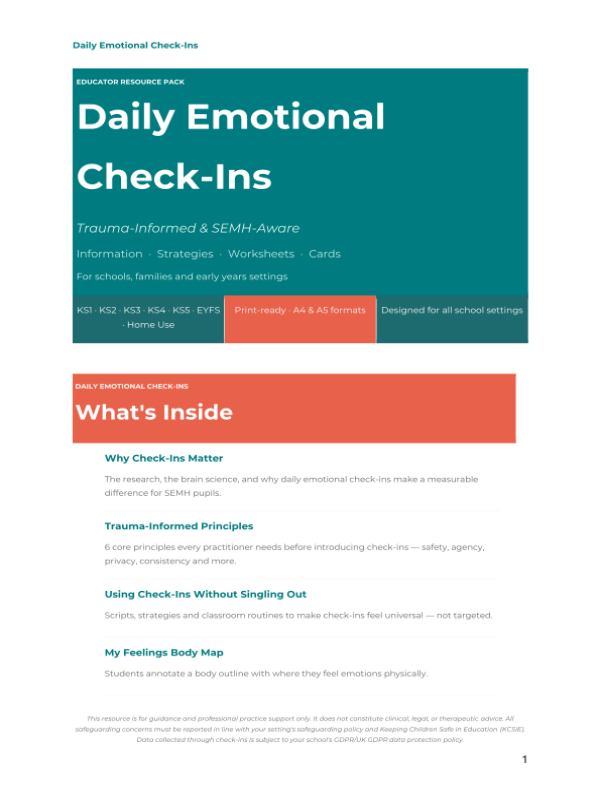
What is the resource?
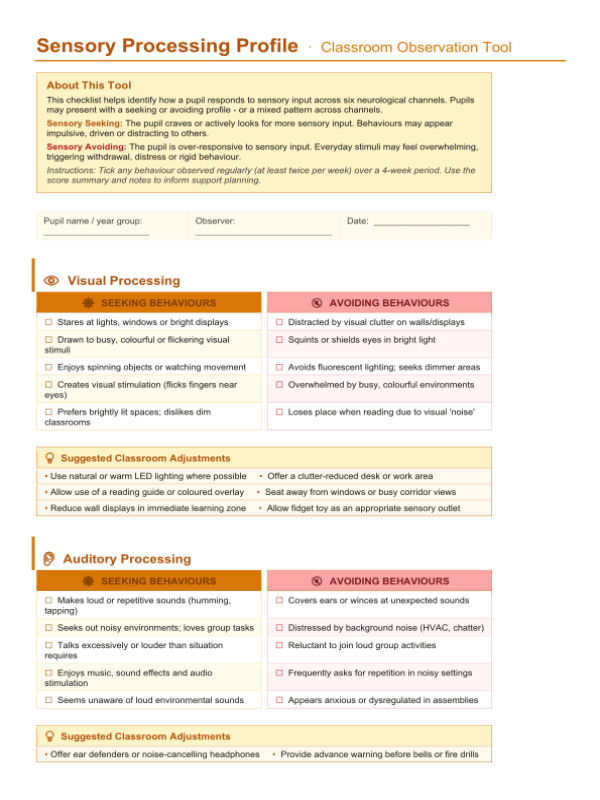
Sensory processing refers to the way the nervous system receives, interprets, and responds to sensory information from the environment and the body. Most people are able to filter and integrate sensory input automatically, but for many individuals — particularly those who are autistic, have ADHD, or have a sensory processing disorder — this process works differently. Sensory input that others barely notice can feel overwhelming, painful, or deeply distressing, while some individuals may seek out intense sensory experiences due to under-sensitivity in certain areas. These differences can affect behaviour, attention, emotional regulation, and participation in everyday activities. A sensory processing profile checklist is a structured tool used to identify and document an individual's sensory preferences, sensitivities, and patterns of response across the eight sensory systems: sight, sound, touch, taste, smell, vestibular (balance and movement), proprioception (body awareness), and interoception (internal body signals). By working through the checklist, parents, carers, or professionals can build a clearer picture of which sensory environments or inputs are comfortable, which are avoided, and which are actively sought out. This profile forms an important foundation for understanding behaviour that may otherwise appear confusing or challenging. It can inform practical adjustments to the home or classroom environment, guide referrals to occupational therapy, and help those supporting the individual to respond with greater empathy and effectiveness. Rather than being a diagnostic tool, the checklist is a starting point for observation, conversation, and personalised support planning.
Who is it for?
This resource is for parents, carers, teachers, and support professionals working with children or adults who show signs of sensory processing differences. It is particularly relevant for those supporting autistic individuals, people with ADHD, or those with a diagnosed or suspected sensory processing disorder. Occupational therapists may also use it as a starting point for more formal assessment.
How it should be used
Complete the checklist through careful observation of the individual across a range of settings and situations, rather than from memory alone. Where appropriate, involve the individual themselves in reflecting on their own sensory experiences. Use the completed profile to identify patterns, share insights with school staff or therapists, and make targeted adjustments to the environment or daily routine. Review the profile periodically, as sensory needs can change over time.