What Is This Resource?
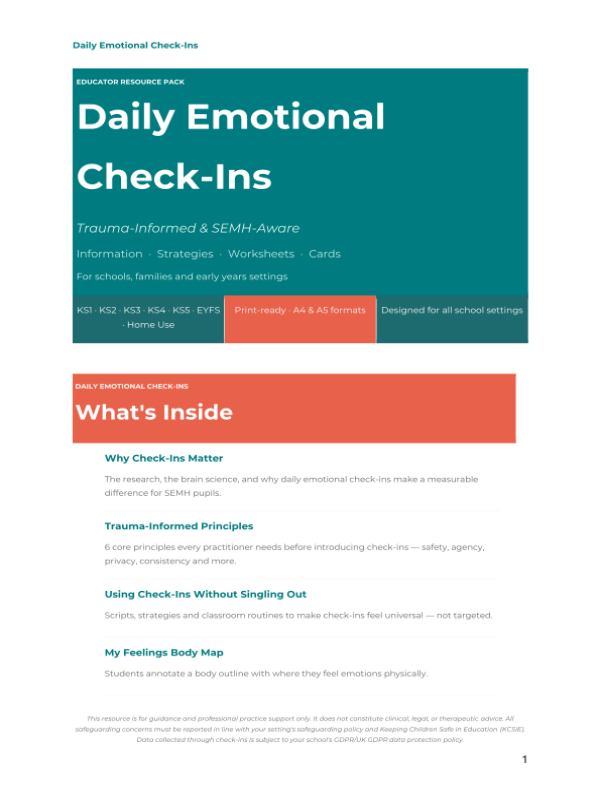
The Daily Emotional Check-Ins Educator Resource Pack is a comprehensive, trauma-informed toolkit designed to help schools, families, and early years settings introduce and sustain daily emotional check-in practices. Spanning 25 pages, the pack covers the research rationale behind check-ins, the brain science that underpins them, six core trauma-informed principles, practical implementation strategies, and a full suite of ready-to-use worksheets and staff reference cards. It is print-ready in both A4 and A5 formats and is suitable for use from EYFS through to KS5, as well as in home settings.
The resource is grounded in evidence from bodies including CASEL, the National Child Traumatic Stress Network, Edutopia, and UCLA affect-labelling research. It presents a clear, accessible case for why brief daily check-ins - as short as 60 seconds - can make a measurable difference to pupil wellbeing, learning readiness, and school safety. The worksheets included are: My Feelings Body Map, My Feelings This Week (a five-day tracker), What Helps Me (a personalised self-regulation toolkit), Check-In Script Cards for staff, a Do's and Don'ts Quick Reference card, and an editable Parent Letter Template. A dedicated compliance section addresses safeguarding duties under KCSIE, UK GDPR obligations, and the limits of pastoral versus clinical support.
How to Use It
The resource is designed to be worked through sequentially before being put into practice. Staff should read the information sections first - covering why check-ins matter, trauma-informed principles, and implementation strategies - before introducing any worksheet or card to pupils. The pack recommends making check-ins universal from day one: every student, every day, with the teacher participating too, so that the practice becomes a class ritual rather than a targeted referral.
Worksheets can be used individually, as part of a pastoral session, or built into morning registration routines. The Check-In Script Cards are designed to be laminated and kept on desks or in pockets, giving staff ready-made, KCSIE-compliant language for common situations. The Parent Letter Template can be edited and sent home ahead of implementation to keep families informed. The Do's and Don'ts card is ideal for display in staffrooms. The compliance section should be reviewed by the Designated Safeguarding Lead before the resource is introduced, to ensure data handling procedures and escalation pathways are in place.
Who It Is For
This resource is primarily aimed at school staff - class teachers, form tutors, pastoral leads, SENCOs, and teaching assistants - across all phases from early years to post-16. It is equally relevant for special schools, alternative provisions, and home education settings. Families are directly catered for through the Parent Letter Template and guidance on using check-in language at home. The worksheets are differentiated by age and stage, making the pack genuinely whole-school in scope.
The resource is particularly valuable for practitioners working with pupils who have Social, Emotional and Mental Health (SEMH) needs, who have experienced trauma, or who are on the SEND register - though its universal design means it benefits all children. It will also be useful for school leaders seeking to embed a trauma-informed culture and for CPD leads looking for accessible, evidence-informed materials to share with their teams.