What is the resource?
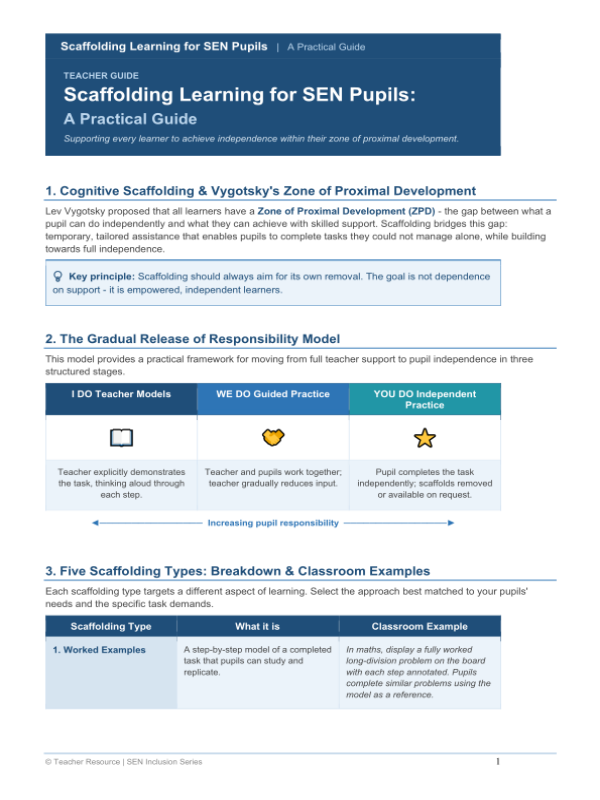
Scaffolding is a teaching approach in which temporary, structured support is provided to a learner to help them access and complete tasks that they could not yet manage independently. Rooted in the work of psychologist Lev Vygotsky and his concept of the Zone of Proximal Development, scaffolding recognises that learners make the greatest progress when working just beyond their current independent ability — but with the right support in place. As competence and confidence grow, the scaffolding is gradually removed, a process known as fading, until the learner can perform the task unaided. Scaffolding can take many forms, including breaking tasks into smaller steps, providing sentence starters or writing frames, offering visual prompts, modelling thinking out loud, or giving partially completed examples for the learner to finish. It is not about doing the task for the learner, but about reducing cognitive load and providing enough structure for them to engage meaningfully and experience success. Worked examples are one of the most effective and well-evidenced scaffolding strategies. A worked example walks the learner through a complete problem or task step by step, making the reasoning and process explicit and visible. Rather than asking learners to discover a method through trial and error, worked examples provide a clear model to study and refer back to. They are particularly powerful when introduced before independent practice, as they reduce the mental effort required to understand a new concept and allow the learner to focus on building understanding rather than managing confusion. Together, scaffolding and worked examples create a structured pathway from supported learning to genuine independence.
Who is it for?
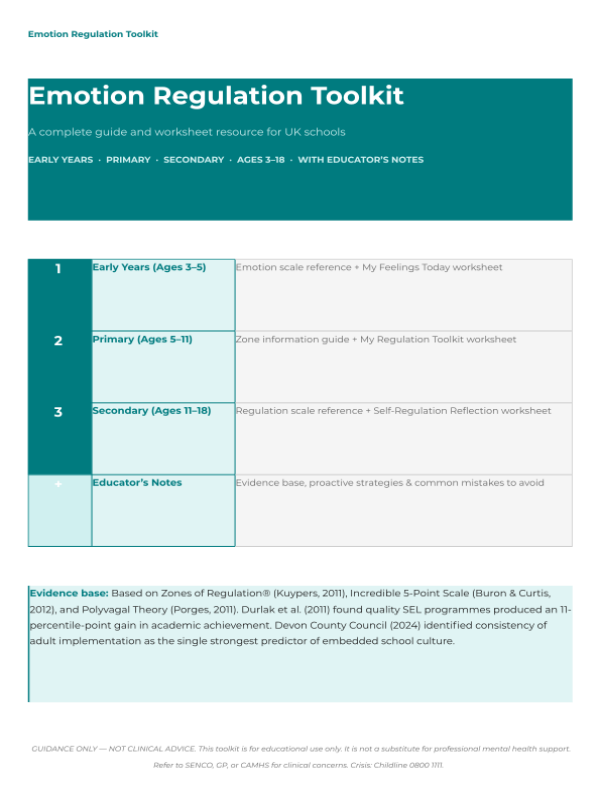
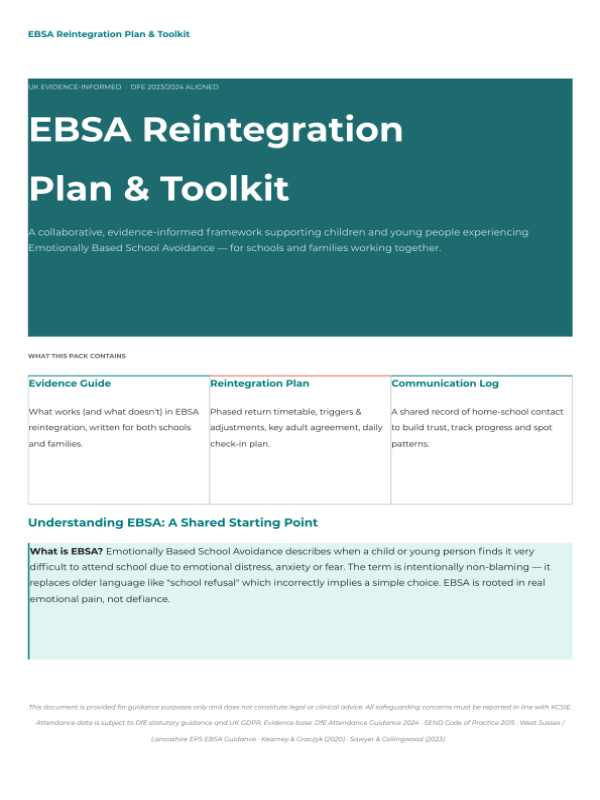
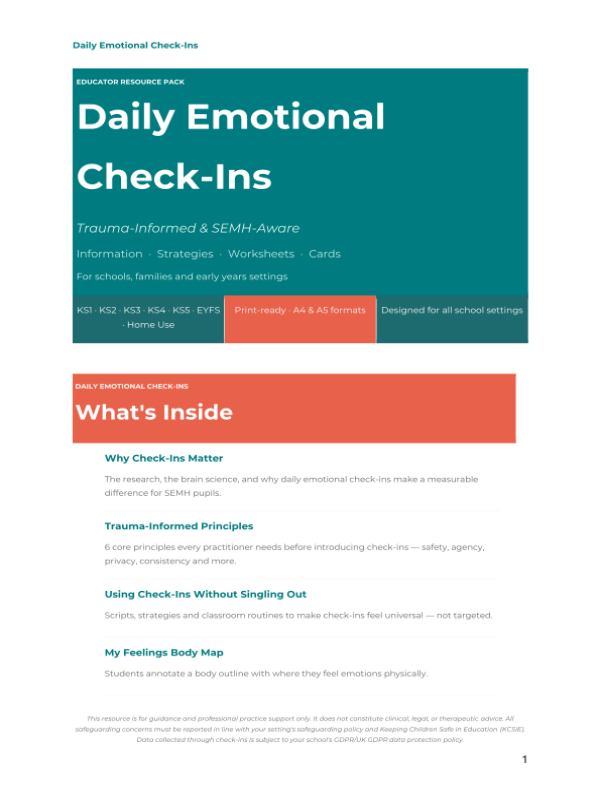
This resource is for teachers, teaching assistants, tutors, and anyone supporting learners who struggle to access tasks independently. It is especially relevant for those working with children who have learning difficulties, SEND needs, or low prior attainment, though the strategies are effective across all ages and abilities, including in higher education and workplace training contexts.
How it should be used
Introduce worked examples before asking learners to attempt a task independently, and encourage them to study and discuss the model rather than simply copying it. Apply scaffolds at the point of need and plan deliberately for how and when they will be reduced over time. Use the resource to audit current practice, identify where additional structure may help specific learners, and select scaffolding strategies that best match the task and the individual's needs.