What is the resource?
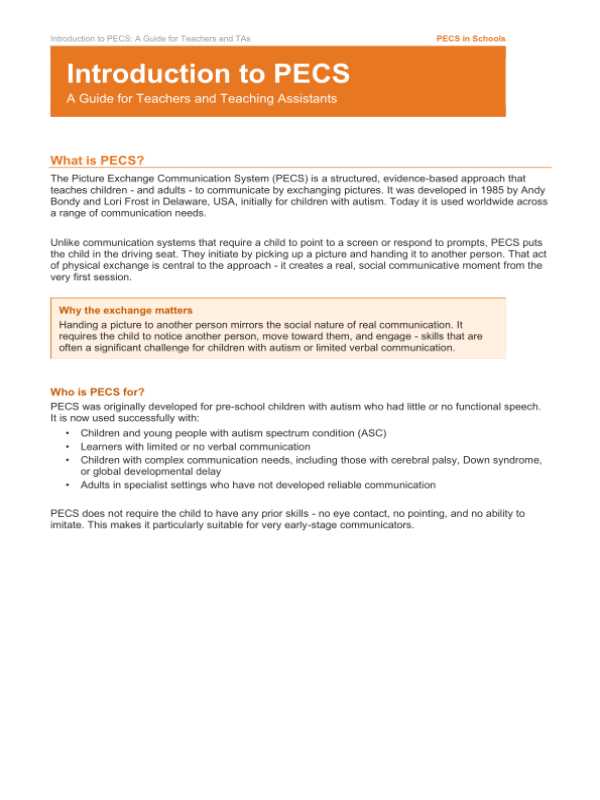
The Picture Exchange Communication System (PECS) is a structured, evidence-based augmentative and alternative communication (AAC) approach designed to help individuals who have limited or no functional speech develop a means of intentional, independent communication. Developed in the late 1980s by Andy Bondy and Lori Frost, PECS teaches individuals to initiate communication by exchanging a picture card or symbol for a desired item, activity, or outcome. Unlike approaches that wait for speech to emerge naturally, PECS is proactive — it gives the individual a functional communication tool from the very beginning of the learning process. PECS is taught across six structured phases, each building on the last. In the earliest phases, the individual learns the fundamental concept of exchange — handing over a picture to receive something they want. Later phases introduce discrimination between symbols, the ability to construct simple sentences using a sentence strip, and eventually the ability to comment on and respond to questions about their environment. Throughout all phases, the emphasis is on spontaneous, self-initiated communication rather than prompted or elicited responses. A PECS introduction guide provides an accessible overview of the system for those new to it, explaining the underlying principles, the phase structure, and the practical requirements for getting started. It typically covers how to identify motivating items to use during early teaching, how to set up a communication book, and the roles of the communication partner and physical prompter during initial phases. PECS is not intended to replace speech; research consistently shows that it can support and even accelerate speech development alongside building functional communication skills.
Who is it for?
This resource is for parents, carers, teachers, and support staff working with children or adults who have limited functional speech, including those who are autistic, have a learning disability, or have a developmental language disorder. It is an introductory guide suitable for those with little or no prior knowledge of PECS, and will be most effective when used alongside training from a qualified speech and language therapist.
How it should be used
Use this guide to build a foundational understanding of PECS before beginning implementation, and to ensure all adults working with the individual are familiar with the approach and their role within it. Identify a small number of highly motivating items to use during early teaching, and set up a communication book with appropriate symbols before starting. Progress through the phases at the individual's pace and seek guidance from a speech and language therapist to ensure fidelity to the approach and to troubleshoot any difficulties that arise.