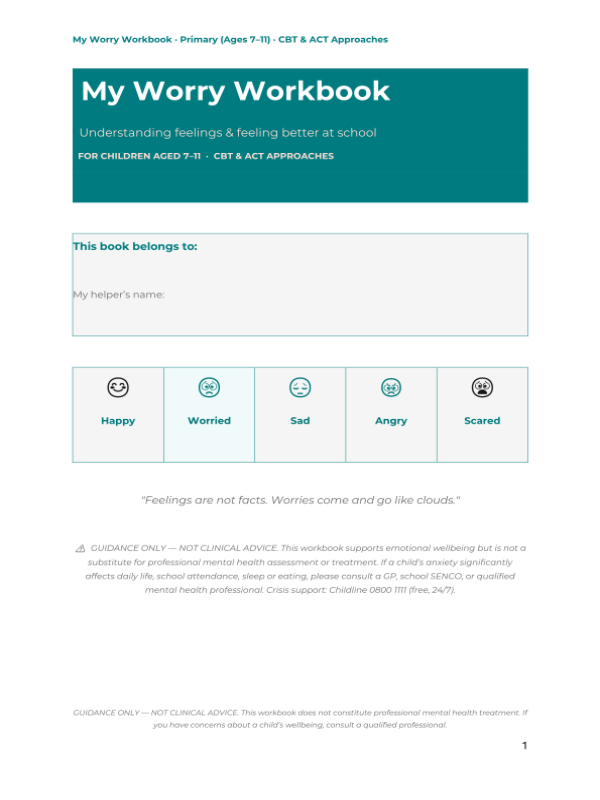
What is the resource?
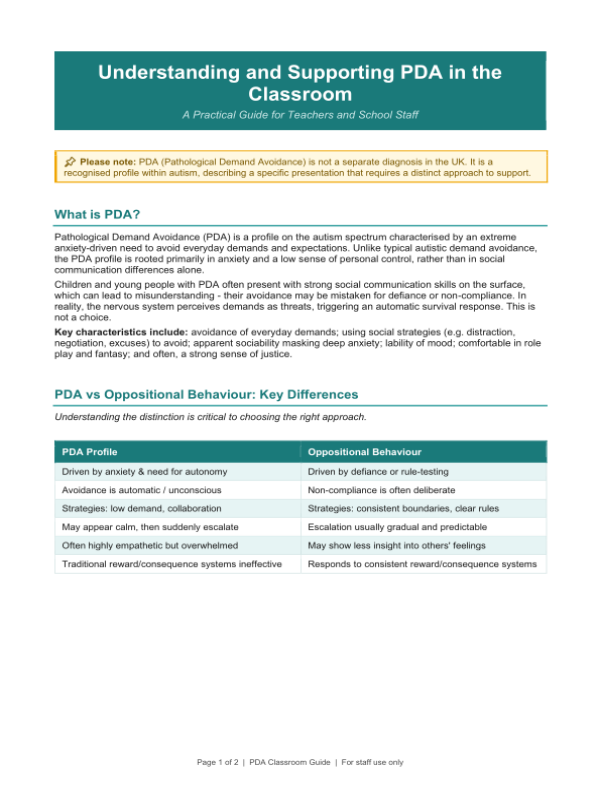
Pathological Demand Avoidance (PDA) is a profile on the autism spectrum characterised by an extreme and persistent avoidance of everyday demands and requests. This avoidance is driven by a high level of anxiety and an acute need to feel in control of one's environment. Unlike demand avoidance that might be seen in other conditions, PDA-driven avoidance is pervasive, often seemingly irrational, and resistant to conventional approaches. Individuals with a PDA profile may use a range of strategies to avoid demands, including distraction, negotiation, outright refusal, or apparent helplessness. PDA strategies are approaches specifically designed to reduce the experience of demand and increase the individual's sense of autonomy and safety. Because traditional reward-and-consequence systems tend to be ineffective — and can even escalate distress — PDA strategies take a fundamentally different approach. They prioritise collaboration, flexibility, and indirect communication over instruction and compliance. This might include framing tasks as choices rather than directives, using indirect language, reducing non-essential demands, and building a relationship of trust and psychological safety. Effective PDA strategies are highly individualised. What works for one person may not work for another, and approaches often need to be adjusted depending on the individual's current anxiety level and environment. The goal is not to eliminate all demands, but to reduce unnecessary pressure, build connection, and create conditions in which the individual can engage more willingly and comfortably with daily life.
Who is it for?
This resource is designed for parents, carers, teachers, and support staff working with or caring for individuals with a PDA profile. It is relevant across home, school, and therapeutic settings. It may also be a helpful starting point for professionals seeking to better understand why traditional behaviour management strategies are often ineffective for this group.
How it should be used
Use this resource as a practical reference for adapting daily interactions and environments to better meet the needs of someone with a PDA profile. Focus on trialling strategies collaboratively rather than applying them rigidly, and monitor what reduces anxiety and increases engagement over time. Where possible, share strategies across home and school to ensure a consistent, low-demand approach. Always consider the individual's current stress levels and adjust expectations accordingly.